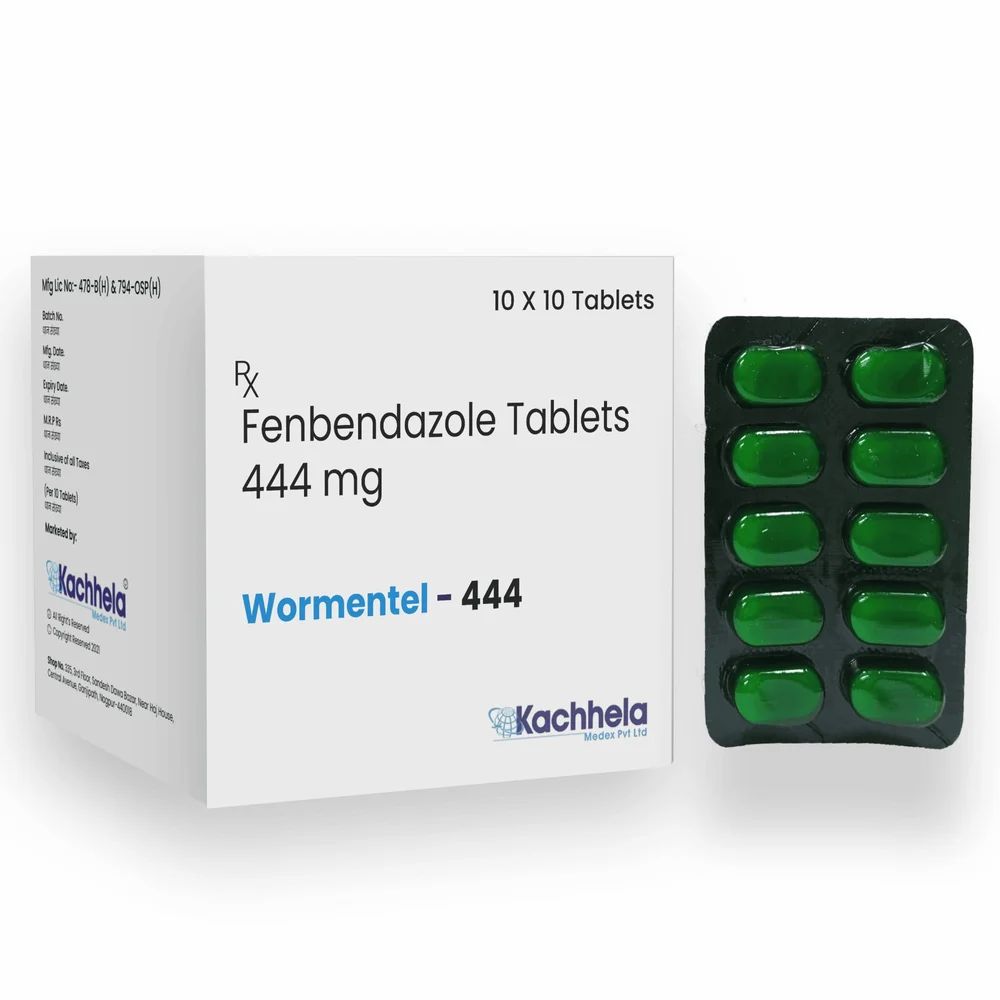
| Brand Name: | Wormental 444 Mg |
| Generic Name: | Fenbendazole 444 mg |
| Manufacturer Name: | Kachhela Medex Private Limited |
| Form: | Tablet |
| Packaging: | 10 Tablets in 1 strip |
| Nature: | Anthelmintic |
| Strength: | 444 mg |
Fenbendazole 444 mg is a broad-spectrum antiparasitic medication widely used in veterinary medicine to treat gastrointestinal parasites in animals. It belongs to the benzimidazole class of drugs and is most commonly administered to dogs, cats, horses, cattle, and other livestock. The “444 mg” designation typically refers to the dosage strength per gram or per packet of a particular formulation, often seen in canine deworming products such as granules or oral suspensions. Understanding fenbendazole 444 mg involves examining its mechanism of action, indications, dosage, safety profile, administration methods, and emerging off-label discussions.
What Is Fenbendazole?
Fenbendazole is an anthelmintic (anti-worm) drug designed to eliminate parasitic worms from the gastrointestinal tract. It is effective against a variety of parasites, including:
- Roundworms (Toxocara, Toxascaris)
- Hookworms (Ancylostoma, Uncinaria)
- Whipworms (Trichuris)
- Certain tapeworms (Taenia species)
- Some lungworms
- Giardia (in certain treatment protocols)
Fenbendazole works by disrupting the energy metabolism of parasites. Specifically, it binds to beta-tubulin, inhibiting microtubule formation. This prevents glucose uptake in the parasite, eventually leading to starvation and death of the worm. Because mammalian cells are less sensitive to this mechanism, fenbendazole is generally safe for animals when used at recommended doses.
The 444 mg Formulation
The “444 mg” labeling often appears on veterinary deworming packets or granules. In many products, 444 mg refers to the amount of fenbendazole per gram of product. For example, a 1-gram packet containing 444 mg of fenbendazole may be designed to treat a specific weight range in dogs.
In canine products, the standard dosing recommendation is typically 50 mg per kilogram (22.7 mg per pound) of body weight once daily for three consecutive days. The 444 mg packet is commonly calibrated to treat dogs of a particular weight bracket, often around 10 pounds per packet per day, though exact instructions depend on the manufacturer’s labeling.
It is important to follow veterinary guidance, as dosing errors can reduce effectiveness or increase the risk of side effects.
Indications and Uses
1. Treatment of Gastrointestinal Worms in Dogs
Fenbendazole is widely prescribed to eliminate common intestinal parasites in puppies and adult dogs. Puppies are particularly susceptible to roundworms and hookworms, which can cause diarrhea, vomiting, weight loss, and poor growth.
2. Giardia Treatment
While not originally labeled for Giardia in all regions, fenbendazole is frequently used off-label in veterinary medicine to treat Giardia infections in dogs. Treatment for Giardia may extend beyond the typical three-day regimen.
3. Livestock Applications
Fenbendazole is extensively used in cattle, sheep, goats, and horses to control parasitic infections that can affect weight gain, milk production, and overall herd health.
4. Exotic and Zoo Animals
Due to its safety margin and broad spectrum, fenbendazole is sometimes administered to exotic animals under veterinary supervision.
Dosage Guidelines
The appropriate dosage of fenbendazole 444 mg depends on the species, weight, and condition being treated. For dogs, the commonly recommended dose is:
- 50 mg/kg (22.7 mg/lb) once daily for 3 consecutive days
For Giardia, the treatment duration may extend to 5 days or longer, depending on veterinary advice.
Livestock dosing varies by species and body weight. For example:
- Cattle: Approximately 5 mg/kg (varies by formulation)
- Horses: Often 5–10 mg/kg, depending on parasite burden
Because formulations differ (granules, paste, suspension), precise measurement is essential. Always use the dosing chart provided with the product or follow a veterinarian’s instructions.
Administration
Fenbendazole 444 mg products are typically administered orally. Common forms include:
- Granules: Mixed with food
- Oral suspension: Liquid given directly by mouth
- Paste: Common in horses
- Tablets: Less common but available
Granule packets are popular for dogs because they can be easily sprinkled over moist food. Ensuring the entire dose is consumed is critical for effectiveness.
Safety and Side Effects
Fenbendazole is considered very safe when used as directed. It has a wide margin of safety, even in young animals and pregnant dogs (though veterinary consultation is recommended).
Common Side Effects (Rare):
- Mild vomiting
- Diarrhea
- Temporary lethargy
In many cases, side effects are minimal or nonexistent. Severe adverse reactions are uncommon but may occur in animals with hypersensitivity.
Because fenbendazole targets parasite cells more specifically than mammalian cells, toxicity is rare at recommended doses. However, overdosing can potentially lead to gastrointestinal upset or more serious complications.
Use in Pregnant and Lactating Animals
One advantage of fenbendazole is its relative safety in pregnant dogs. It is sometimes used in breeding programs to reduce transmission of roundworms to puppies. However, dosing during pregnancy must always be supervised by a veterinarian to ensure proper timing and safety.
Drug Interactions
Fenbendazole has minimal known drug interactions. It is sometimes used alongside other antiparasitic agents in complex deworming protocols. However, combining medications should always be guided by a veterinarian to avoid unnecessary overlap or stress on the animal.
Resistance Concerns
In livestock industries, parasite resistance to benzimidazoles (the drug class that includes fenbendazole) has become a growing concern. Overuse or improper dosing may contribute to resistance development. Rotational deworming strategies and fecal egg count monitoring are recommended in herd management.
In companion animals, resistance is less commonly reported but remains a theoretical concern.
Storage and Handling
Fenbendazole products should be stored at room temperature, away from moisture and direct sunlight. Keep out of reach of children and non-target animals. Expired medications should be disposed of according to veterinary or pharmacy guidelines.
Off-Label and Human Interest
In recent years, fenbendazole has gained attention online for unproven alternative uses in humans. It is important to emphasize:
- Fenbendazole is not approved for human use.
- Veterinary formulations are not manufactured under standards required for human medications.
- Safety and efficacy in humans have not been established through rigorous clinical trials.
Anyone considering off-label or non-veterinary use should consult a qualified medical professional. Self-medicating with veterinary drugs can be dangerous.
Advantages of Fenbendazole 444 mg
- Broad-spectrum parasite control
- High safety margin
- Suitable for young animals
- Easy oral administration
- Widely available veterinary product
Limitations
- Requires multiple consecutive days of dosing
- Not effective against all tapeworm species
- Potential for resistance with overuse
- Not approved for human consumption
When to See a Veterinarian
While over-the-counter dewormers are available, veterinary consultation is recommended if:
- Symptoms persist after treatment
- Severe diarrhea or vomiting occurs
- The animal is very young, elderly, or medically compromised
- There is suspected heavy parasite burden
- Recurrent infections occur
A veterinarian may recommend fecal testing to confirm the type of parasite and ensure the correct medication and dosing schedule.
Conclusion
Fenbendazole 444 mg is a widely used veterinary antiparasitic medication valued for its effectiveness and safety. It plays a crucial role in controlling intestinal worms and certain protozoal infections in dogs, livestock, and other animals. The 444 mg formulation typically refers to a specific concentration designed to simplify dosing based on body weight.
When used according to veterinary guidelines, fenbendazole is generally safe, well tolerated, and effective. However, responsible usage—including proper dosing, veterinary consultation, and resistance awareness—is essential for maintaining its effectiveness.